By Harrison Pogue, Senior Video Producer
July 28, 2025
Once Upon a Time in a Forest in East Los Angeles
Chapter One: Dreams of the Silver Screen
On a cool, mid-December morning in the Boyle Heights neighborhood of Los Angeles, the hum of forklifts and clacks of lumber echo off the graffiti-laden industrial buildings. Jeff Perry, in his efforts to isolate himself from the soundscape, sits in his dusty Toyota Tacoma hopping from call to call. He’s the founder and co-owner of Angel City Lumber (ACL). At the other end of the line are other local business owners, contractors, designers, and sometimes even government officials. It can be tiring, but these phone calls are vital to push the company to new heights. “I mean, it started out as going to get trees, milling them...now my day to day is much more…macro. Looking ahead, where are we going? How do we get there? How do we finance it? Who are some community organizations that we can talk about the future with?”
For Jeff, looking ahead is something of a foreign concept, let alone starting a lumber business. I met him in April of 2024 at a favorite local hangout, The Thirsty Crow, in the Silver Lake Neighborhood of LA. He looked as one might imagine a woodworker in Los Angeles: part hippie, part sawyer, and a touch of surfer – gently weathered by sun and sawdust. He had just finished a long day’s work, and beneath the bar’s playlist of grunge rock, he tells me there were no intentions of starting a lumber business when he moved here from Boston in 2002. Like many Angelinos, Jeff migrated west to pursue life in front of the camera: “I came to Los Angeles to be an actor…how cliche,” he says with a chuckle. Like a great Hollywood film, Jeff’s story has all the elements of a classic: character growth, discovery, unexpected turns, and chance events. The ending of this narrative, however, just wouldn’t end with a red-carpet premiere.


As it became clearer that life was steering him away from the silver screen, Jeff turned his attention to another affinity: woodworking. “All I knew is that I loved wood, and I loved working it”. Now in his mid-thirties, Jeff faced the pressures of caring for a young family in costly Los Angeles and doing so as a carpenter was not easy. “It was hard making ends meet because it would be a really exciting project one minute, and then I'd be out of work for a while, and I knew that I needed to develop some way of altering or changing my career to create a more stable environment for my kids to grow up in. I was unrelenting, though, about it being aligned with my heart. So, I didn't want to just take a job that was well-paying, but soul-sucking”. During his sons’ infant years, Jeff often worked alone late into the night and had a list of go-to podcasts. “One night I heard Bill Nye talking about ‘No matter what your occupation is, if you want to positively contribute to your home planet you can.’” Jeff chewed on this, but he couldn’t quite connect how it applied to him.
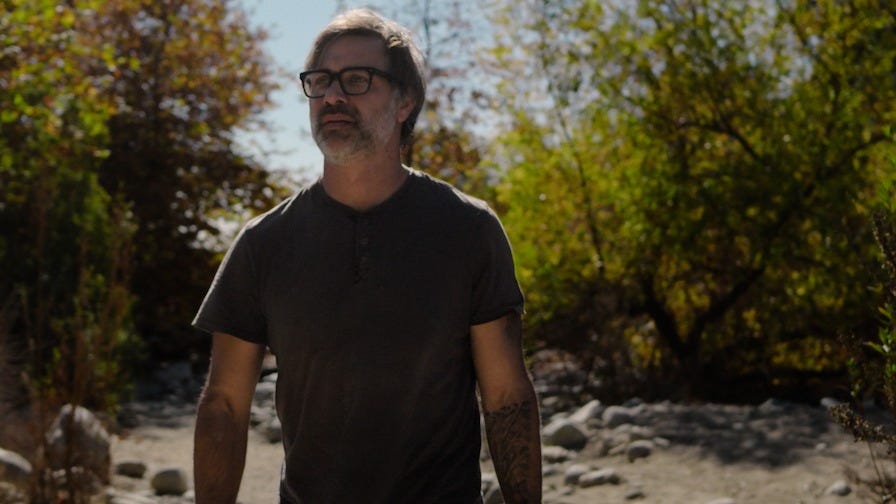
One day, with his two-year-old son Owen in tow and his beloved dog Bean leading the way, the three set out on a routine trek in Eaton Canyon near Altadena, northeast of the city. “This was right after a storm, we were walking across the initial creek bed, and there in front of us at the ‘T’ on the trail was this fallen co-dominant, Coast Live Oak…[it] was a majestic tree and it was that moment when I thought to myself, well why wouldn’t I utilize this?” Jeff’s excitement, however, would soon be contained. He found a park ranger nearby to inquire. “He [Park Ranger] said, no, you can’t. Although, I relate and I appreciate what you’re saying, but no you can’t”. For any tree that falls in Los Angeles County, the ranger explained, its remains that lie in brush would be left to decompose - a healthy process for the ecosystem. Any part that happened to be an obstruction, however, would be chain sawed and hauled off to become mulch. For a county with just as many trees as its people --10 million by estimates of the city -- that was a lot of waste. Finally, Bill Nye’s words hit. Jeff launched his mission: to save fallen LA trees from becoming mulch. He would quickly discover, though, that it would be a task impossible to accomplish alone.


Chapter Two: A Focused Mission
As Jeff was launching what would become Angel City Lumber in 2015, Todd Cooper was hitting the same wall many, including Jeff, hit during their time in Los Angeles: “I was doing a lot of improv and comedy and acting…commercial auditions and all this kind of stuff. I was just kind of getting to the point where I was like, man, I love this, but it’s not fruitful”. By happenstance, Todd met Jeff through a friend. “I just liked Jeff”, he recalls. “At the same time, I had remodeled my kitchen, and I thought maybe working with my hands would be really cool”. So, Todd decided to cold call Jeff. “I was like, ‘Could I work with you? I don’t know anything, but you could teach me, and I’ll work hard.’”
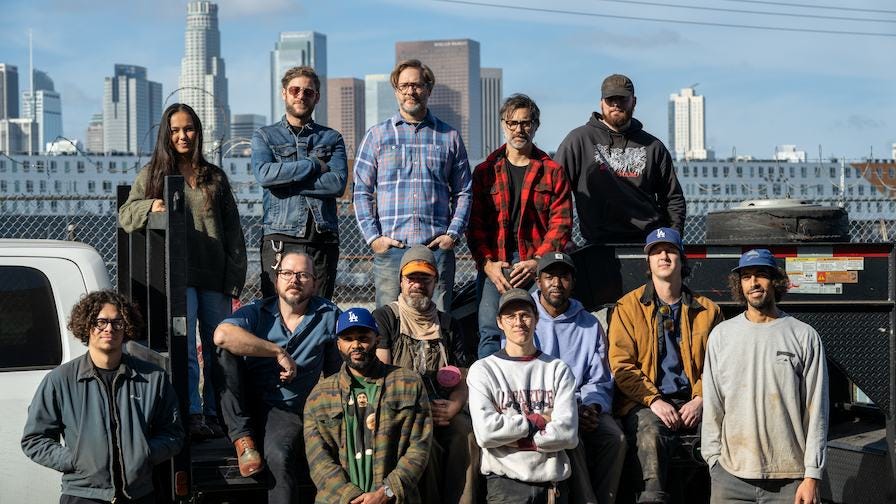
With Angel City Lumber in its infancy, Todd was in. “I was 40 years old, and I was just sweeping a giant warehouse floor. It was my first day or so, and I’ve never been happier. It just felt good. I love the mission”. 10 years and 14 employees later, the mission hasn’t changed. When customers walk through the bay door off Anderson Street, they’re greeted by a lathed California Sycamore slab that reads: “Mission: Reconnecting Angelenos with nature by manufacturing wood products from our fallen neighborhood trees”. These aren’t just fancy marketing words. The Angel City Lumber team live it, breathe it, and preach it. Every decision they make, whether it’s a project for a private residence, or a large install in a high-profile establishment, is guided by them. “All of our trees are marked what neighborhoods they’re coming from because we want our community in LA to be able to recognize where this tree lived and grew because it’s also this living thing in our community”, says Todd.
Make no mistake, for every ounce of love Jeff and Todd have for trees, they have just the same amount for the city they call home. One could forget Perry is an East Coast transplant the way he speaks about Los Angeles: “I am so obsessed with this city”, he gushes. “It's a place that has such a rich history in its indigenous people. It has such a rich, if not brief history of a melting pot of all different people and walks of life that have arrived here. It's heartbreaking and violent, but also inspiring and beautiful. And it's just metaphorical of life. And I just love it”.


Chapter Three: Excellence in Craftsmanship
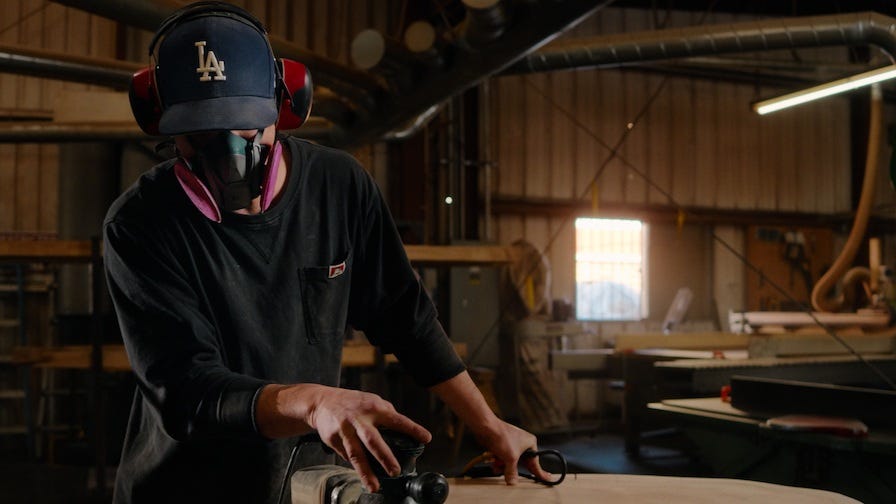
This genuine love for Los Angeles is not only shared throughout the Angel City team, but it’s also reflected in their work and the tools chosen for the trade. Each piece is crafted with an extreme attention to detail. Kian, the lead sawyer, meticulously calculates every cut on the LT70 Wood-Mizer sawmill with the end result in mind. The mill’s design is ideally suited for ACL and they appreciate the versatility of the mill since they are not picking logs that meet their needs but rather salvaging logs that come in all shapes, sizes, and condition. As the largest portable sawmill Wood-Mizer offers, ACL not only saws logs in-house on their metropolitan site, but they also offer onsite sawing at customer locations.
On the manufacturing side, Eric and Nico, two of the teams’ carpenters combine their meticulousness with precision tools, also from Wood-Mizer. Driven to showcase wood’s beauty, ACL also depends on the Slab Mizer slab flattener. Equipped with a variable speed cutter head and large work surface, ACL efficiently surfaces and flattens slabs, boards, burls, cookies, and more. Using this machine, ACL ensures that LA trees stay close to their natural form,giving customers the opportunity to bring nature into their homes as shelves, tables, countertops and more.
The inclusion of a moulder planer further allows ACL to produce finely finished wood products. From Urban Eucalyptus and Coast Live Oak to Forest Ponderosa and Jeffrey Pines, precious boards from these trees are converted into premium wood flooring and custom millwork to meet their customers’ diverse preferences. In many shapes and sizes, finely shaped wood becomes the canvas for homeowners and designers who work with ACL.
“Everyone at ACL is extremely skilled in a very specific fashion. Working with people who are creative and know how to use their hands to make things is really inspiring,” says Todd.
Chapter Four: LA Trees for LA People
With a team full of skilled makers, one might envision winding sculptures or elaborate designs, but it’s simplicity that they take pride in. “The thing we all know at Angel City Lumber,” Jeff says, “is that simple doesn’t come easy. The effort that’s required to get simple is great. And that’s design. That’s craftsmanship. That’s everything we encompass. And I would say we’re in a hotbed of designers who are really good at their job, so they know how to execute design that’s extremely simple and elegant.” While Jeff says this with humility, their work & client list does the boasting.
1 Hotel in West Hollywood features over 75 tons of local lumber from ACL. Uchi, a high-end Sushi restaurant with limited locations around the country, is just down the road. It features vertically hung slabs that encompass the entire dining space, making for a truly unique dining experience. The space includes dimensional lumber which came from 42 logs and 25 distinct trees from 14 neighborhoods all over LA County. You’ll even find Angel City’s work in lesser-known spots, like Platform Park. Nestled underneath the overpass of a Metro Rail station in Culver City, shoppers and diners soak in the LA weather on Redwood and Cedar benches from Griffith Park and Pasadena.
Brady Zaitoon, CFO and Custom Project Sales lead, worked as a building commissioner for years in the green building sector in Austin, TX and joined the ACL team with the specific goal of putting their work into public facing spaces. Brady knew the business would grow by getting in front of architects who are forward-thinking and sustainably minded to use local materials. This strategy landed one of their first big commercial projects at the aforementioned 1 Hotel in West Hollywood. “They initially asked us if we could make some tables for the inside space. But the more we got involved they asked, ‘Can you do a reception desk’? And then the developer came to us directly and asked if we could put proposals together for doing 500 linear feet of planters.” From there, the word spread.
While these custom, high-end style projects have been key to ACL’s growth, Jeff, Todd, and the rest of the team are mindful of the bigger picture. Jeff expresses, “You know, right now we can’t compete with the Home Depot price. We touched these boards 700 times. So, it’s going to be more expensive by nature, but we really don’t want to price people out. Our dream is to continue to lower prices because we want everyone to experience these trees. They’re not rich people’s trees. They’re not some specific group of Angelinos trees. They’re our community trees, all of our community”. The company’s website features many wood accents that make it possible for homeowners to give their community trees a new place to call home.
Chapter Five: Oblivion
If indeed the Angel City Lumber screenplay were to be produced in Hollywood, it may lend itself better suited for an episodic on a streaming network. Each episode brings new developments, characters, side plots, and cliffhangers. The ending of the story, though? Well, Jeff knows what he would write: “I want Angel City Lumber to be the last bastion of how we do lumber today. And what I mean by that is I want Angel City Lumber 100 years from now to…vanish.” Perry envisions a world where we manage our resources on a local level; where every local neighborhood and every micro community manages their own trees, mills their own timber, and uses that timber with a holistic view, including planting trees, maintaining them, and seeing trees at their death. This is what ACL does today but with the intention that local communities will take it on themselves. “There won't be a need for Angel City Lumber anymore. The legacy, hopefully, is we just fade into oblivion because we're reconnecting to the way we should be doing it,” expresses Jeff.
Right now, though, ACL will continue to lead the way in Los Angeles County, and not just the urban areas. In early 2024, they began working hand-in-hand with the US Forest Service to harvest dead and hazardous trees in the Angeles National Forest. It’s a crucial step towards turning the tide for a city, state, and country that has been scarred by catastrophic wildfires. Jeff is not one to shy away from the topic. “Forest fires always have been happening,” he notes. “They have in the past been managed. However, in the more recent past, our participation with our local forests has dwindled. And I specifically mean, as Americans.” Perry, who holds a fierce passion and deep knowledge on the topic, was naturally eager when the opportunity presented itself: “We're kind of getting a new chance at how we interface with the Angeles National Forest and utilizing timber from trees that we're not cutting down for timber. We're making timber from them because they've expired. And that's a much different ballgame. And then also to tell the story of those trees that expired. So, it first started as a minor understanding of what happens to all of the Los Angeles County urban trees. And then realizing that a similar thing is happening in our own forests…it was a gut punch. But we have an opportunity to reconnect not only with our urban forest, but also our local forest.”
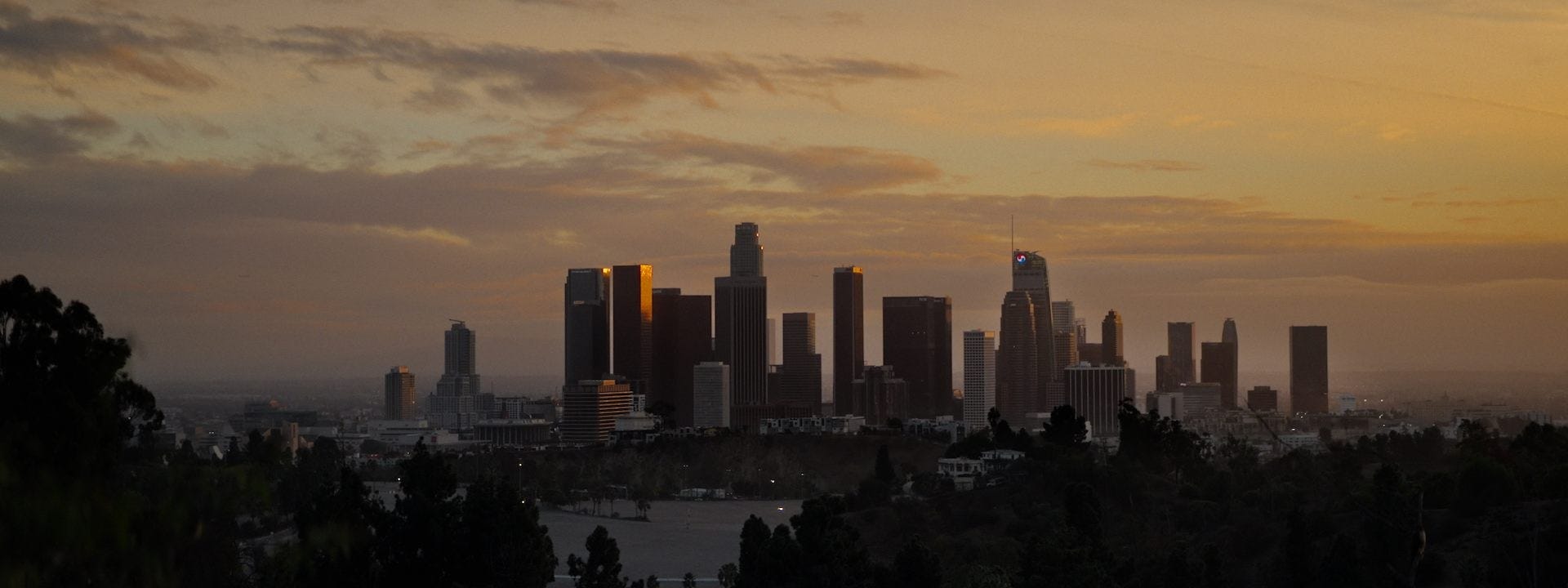
In a weird twist of irony, these two beings – Los Angeles & Angel City Lumber – are a perfect match. Los Angeles, a sprawling city carved with graffiti-laden concrete meets Angel City Lumber, a sawmill here to remind everyone that amidst the man-made metropolis exists a lush, historic ecosystem waiting to be reconnected with.